
If you’re a Las Vegas homeowner dealing with sneezing, itchy eyes, asthma flare-ups, or lingering indoor odors, your upholstered furniture could be part of the problem. Sofas, sectionals, recliners, and dining chairs quietly collect dust mites, pet dander, pollen, and other allergens deep inside the fabric over time. Many people vacuum their floors regularly but forget their furniture entirely. That’s where problems start. Since 1996, Love Your Carpet has helped Las Vegas families deep clean upholstery, carpets, and other surfaces that trap hidden contaminants and affect indoor air quality.
Upholstery acts almost like a giant air filter inside your home. Every time someone sits down, pets climb up, or air circulates through the room, tiny particles settle into the fibers. Over months and years, those materials build up more than most homeowners realize.
Can Upholstery Really Hold Allergens and Dust Mites?
Yes. Upholstered furniture is one of the most common places for allergens and dust mites to accumulate indoors. Fabric furniture naturally traps:
- Dust mites
- Pet dander
- Pollen
- Mold spores
- Dead skin cells
- Bacteria
- Smoke residue
- Food particles
Dust mites thrive because upholstery gives them exactly what they need: warmth, moisture, and food. Humans shed skin cells daily, and those microscopic flakes become a food source for mites hiding inside cushions and fabric seams.
What surprises many homeowners is that allergies are not caused by the mites themselves. The real trigger comes from proteins found in their waste and shed body fragments. Once disturbed, those particles become airborne and can irritate allergies and asthma.
According to the American Lung Association, dust mites are one of the most common indoor allergy triggers. The Mayo Clinic allergy-proofing guide also recommends reducing dust buildup on soft surfaces in the home.
Why Upholstered Furniture Becomes a Breeding Ground
Dust Mites Feed More Than Dirt
- A clean-looking couch is not necessarily a clean couch. Too many homeowners assume that if the fabric looks fine, it must be sanitary. In reality, allergens settle beneath the surface where regular wiping cannot reach.
Dust mites feed primarily on dead skin cells. Every person in your home contributes to that buildup naturally. Add pets, spills, humidity from showers, or tracked-in pollen from outside, and upholstered furniture becomes an ideal hiding place.
Why Las Vegas Homes Still Deal With Indoor Allergens
- People often assume dry desert climates eliminate dust mite problems. Not exactly. While Las Vegas is dry outdoors, indoor environments create different conditions. Air conditioning systems, closed windows, pets, cooking moisture, and daily living all contribute to the trapping of indoor contaminants.
In fact, many Las Vegas homes stay sealed tightly during extreme summer heat. That means allergens circulate indoors longer without enough fresh-air exchange. A family in Summerlin may vacuum weekly and still struggle with allergy symptoms because their sectional sofa has not been professionally cleaned in years. It happens more often than people think.
Common Allergens Found in Upholstery
Your furniture can collect a surprising amount of debris over time. Common allergens include:
| Allergen | Where It Comes From | Potential Effects |
| Dust mites | Skin cells and fabric fibers | Sneezing, asthma, and itchy eyes |
| Pet dander | Cats and dogs | Respiratory irritation |
| Pollen | Clothing, shoes, open doors | Seasonal allergies indoors |
| Mold spores | Moisture and spills | Breathing issues |
| Bacteria | Food spills and daily use | Odors and contamination |
Furniture in high-traffic rooms tends to collect the most buildup, especially family room sofas and upholstered dining chairs.
Signs Your Upholstery May Be Affecting Your Allergies
Some warning signs are subtle. You may notice:
- Sneezing more while sitting on the couch.
- Itchy or watery eyes indoors.
- Worsening asthma symptoms at home.
- Musty odors coming from furniture.
- Increased symptoms when the AC turns on.
- Dust buildup returning quickly after cleaning.
If symptoms improve after leaving the house for several hours, indoor allergens may be contributing more than you realize.
Can Dust Mites Live in Fabric Furniture?
Absolutely. Dust mites commonly live in upholstered furniture, mattresses, curtains, rugs, and carpets. They especially prefer:
- Thick cushions
- Plush fabrics
- Older furniture
- Furniture exposed to pets
- Areas with limited cleaning
Unlike bed bugs, dust mites are microscopic and invisible to the naked eye. Most homeowners never realize how much buildup exists until professional extraction cleaning pulls contaminants from deep inside the fabric.
What Kills Dust Mites on Fabric?
Vacuuming With a HEPA Filter
Regular vacuuming helps reduce surface-level allergens. A vacuum equipped with a HEPA filter is important because it traps microscopic particles instead of recirculating them back into the air.
Use upholstery attachments on:
- Sofa cushions
- Chair seams
- Fabric headboards
- Armrests
- Under cushions
Still, household vacuums only remove part of the problem.
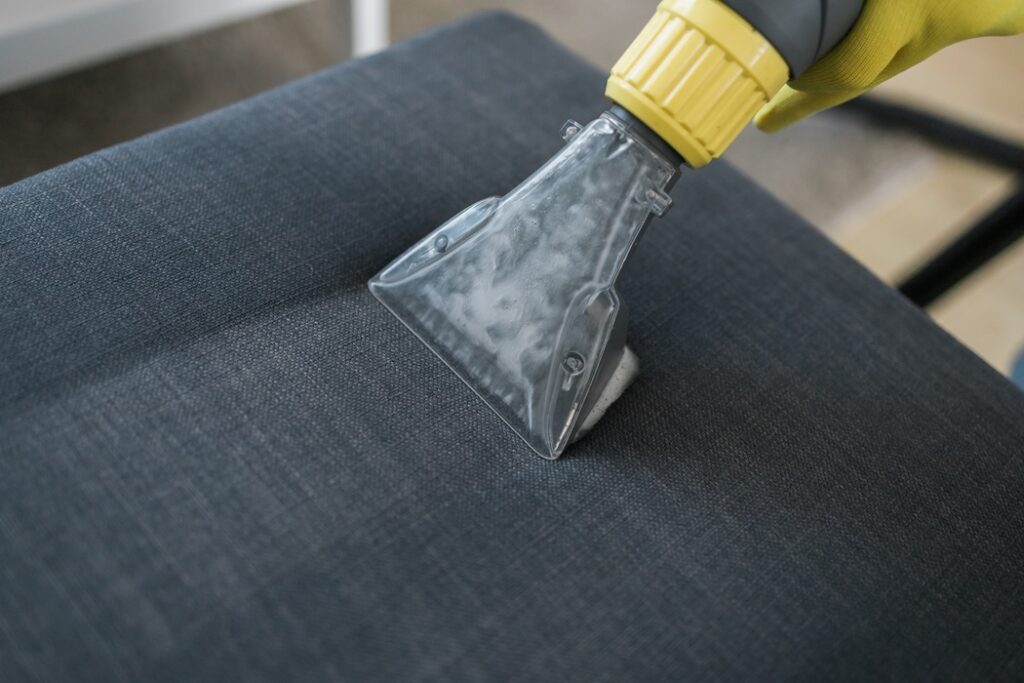
Steam Cleaning and Professional Deep Cleaning
Steam cleaning is one of the most effective ways to eliminate dust mites and embedded allergens from upholstery. High heat helps:
- Kill dust mites.
- Break down allergen buildup.
- Remove oils and dirt.
- Extract trapped contaminants.
- Reduce odors.
Professional upholstery cleaning reaches deep beneath the visible surface where allergens collect over time. That deeper extraction matters. Especially in homes with pets, kids, or heavy furniture use.
Controlling Indoor Humidity
Dust mites absorb moisture from the air rather than drinking water directly. Keeping indoor humidity below 50% can help reduce dust mite populations. Simple steps include:
- Using quality air filters
- Running dehumidifiers when needed
- Fixing spills or moisture issues quickly
- Improving ventilation
- Cleaning upholstery regularly
How to Remove Dust Mites From Upholstery
Homeowners can reduce allergens by combining regular maintenance with professional cleaning. A good routine includes:
- Vacuum upholstery weekly with a HEPA-filter vacuum.
- Wash removable covers when possible.
- Rotate cushions regularly.
- Keep pets off the furniture when possible.
- Address spills immediately.
- Schedule deep professional cleaning every 12–18 months.
Homes with pets, smokers, children, or allergy sufferers may benefit from more frequent cleanings.
How Often Should Upholstery Be Professionally Cleaned?
Most upholstery should be professionally cleaned every 12 to 24 months. However, some Las Vegas households need more frequent service. For example:
- Homes with pets: every 6–12 months.
- Allergy sufferers: every 6–12 months.
- Homes with children: every 6–12 months.
- Light-use furniture: every 18–24 months.
Too many homeowners wait until the furniture looks visibly dirty. By then, allergens and oils have already settled deep into the material.
Why Professional Upholstery Cleaning Makes a Difference
DIY sprays and rental machines often clean only the surface. Professional upholstery cleaning uses specialized equipment designed to:
- Extract embedded debris.
- Remove deep allergens.
- Eliminate odors.
- Protect delicate fabrics.
- Improve furniture appearance.
- Extend furniture lifespan.
That matters in Las Vegas, where furniture is constantly exposed to dust, dry air, pets, and everyday use. Love Your Carpet has been serving the Las Vegas Valley since 1996, helping homeowners restore furniture, improve indoor cleanliness, and protect their investment without unnecessarily replacing expensive pieces.
Final Thoughts
- Upholstery can absolutely harbour allergens and dust mites, even when the surface appears clean. Dust mites, pet dander, pollen, and other irritants settle deep into fabric fibers over time and may contribute to allergy symptoms, poor indoor air quality, and lingering odors.
Regular vacuuming helps, but deep professional upholstery cleaning removes the buildup most homeowners cannot reach on their own. If your furniture hasn’t been cleaned in years, or if your family struggles with indoor allergies, it may be time to take a closer look at what’s hiding beneath the surface.
- If you need professional upholstery cleaning in Las Vegas, contact Love Your Carpet at 702-898-6070 to schedule a deep cleaning and help create a fresher, healthier home environment.