
If you’re a Las Vegas pet owner who’s noticed a yellow spot that won’t disappear or a stubborn odour keeps coming back despite regular cleaning, this article is for you. Pet accidents aren’t just surface stains. Urine can seep deep into carpet fibers, padding, and even the subfloor, causing permanent discoloration, structural damage, and chronic odors. At Love Your Carpet, we’ve been serving the Las Vegas Valley since 1996, and we’ve seen firsthand how untreated pet accidents turn into expensive carpet replacements. The good news? With proper professional treatment, that damage can often be prevented.
Here’s what most homeowners don’t realize: by the time you smell it, it’s already below the surface.
Why Pet Urine Causes Permanent Carpet Damage
Pet urine is chemically complex. It contains water, uric acid, urea, ammonia, bacteria, and various salts. When it hits your carpet, it begins reacting immediately, and those reactions continue long after the spot appears dry.
Chemical Reaction With Carpet Dye
Fresh urine starts off acidic, but as it dries, bacteria break down the urea and convert it into ammonia, raising the pH and making the area alkaline. That shift in pH can chemically alter carpet dyes.
This often results in:
- Yellow or orange staining
- Lightened or bleached areas
- Permanent color distortion
Once the dye structure is chemically changed, no cleaning solution can restore the original color. The damage is permanent. That’s why fast and correct treatment matters.
In Las Vegas homes with lighter beige or cream carpets, which are extremely common, these discolorations stand out dramatically.
Deep Seepage Into Padding and Subfloor
Carpet is layered. Beneath the visible fibers are backing materials and absorbent padding. Urine doesn’t stop at the top. It travels downward due to gravity and capillary action. If the accident is significant, or repeated in the same spot, it can soak into:
- The carpet backing
- The padding underneath
- The subfloor (wood or concrete)
In homes across Henderson, Summerlin, and Green Valley, we often find that what looks like a small stain on top has spread much wider beneath the surface. Here’s where it gets worse: during Las Vegas monsoon season, when humidity rises, moisture in the air can reactivate dried urine crystals embedded deep in the flooring. That’s when homeowners say, “It smells worse when it’s humid.” They’re not imagining it.
Uric Acid Crystallization
When urine dries, it leaves behind uric acid salts. These salts form microscopic crystals that bond tightly to fibers and porous materials.
These crystals:
- Are insoluble in water
- Reactivate when exposed to moisture
- Continue releasing odor over time
This is why DIY cleaning often “works” for a few days, only for the smell to return. Regular household cleaners do not dissolve uric acid crystals. Only specialized enzymatic treatments designed to break down the molecular structure can neutralize them properly.
Bacteria Growth and Contamination
Urine is organic waste. When left untreated, bacteria multiply rapidly in the warm, padded layers of your carpet. Over time, this can cause:
- Strong ammonia odors
- Padding breakdown
- Fiber deterioration
- Indoor air contamination
According to the American Lung Association, indoor biological pollutants can contribute to respiratory irritation and allergy symptoms. In tightly sealed Las Vegas homes where air conditioning runs year-round, contaminants can circulate repeatedly. In severe cases, we’ve seen padding so contaminated that full replacement was necessary.
Can Pet Urine Stains Be Permanent?
Yes, and often they are if not treated correctly. There are two types of “permanent” damage:
- Dye damage from pH imbalance
- Structural damage to the backing or padding
If the carpet fibers themselves have been chemically altered, cleaning will remove odor but not restore color. If the padding has deteriorated, sections may need to be replaced. Too many homeowners delay professional treatment, thinking the issue is minor, until replacement becomes the only option.
What Happens If You Don’t Clean Dog Pee Out of Carpet?
Ignoring pet accidents can lead to a chain reaction. First, odor sets in. Then bacteria multiply. Then pets return to the same spot because they can detect scent markers humans cannot. This creates:
- Repeated accidents in the same location
- Expanded contaminated zones
- Increased risk of subfloor absorption
Over months, what began as a small accident can turn into widespread flooring damage. We’ve responded to calls where homeowners were certain their pet had “behavioral issues”, only to discover lingering urine scent in the carpet was the trigger.
Can Old Dog Urine in Carpet Make You Sick?
While not every untreated accident leads to health issues, chronic contamination can impact indoor air quality. Old urine can release ammonia gases and harbor bacteria that contribute to:
- Allergy flare-ups
- Sinus irritation
- Respiratory discomfort
- Headaches in sensitive individuals
Children and elderly family members are often more sensitive to these pollutants. If your home smells persistently unpleasant or musty despite cleaning, it’s worth investigating deeper contamination.
Why DIY Cleaning Often Fails (And Can Make It Worse)
For most homeowners, grabbing a towel and store-bought cleaner is the natural first line of action to a pet accident. However, this approach often falls short due to the following reasons:
Masking Instead of Removing
Most consumer carpet sprays are deodorizing agents. They coat the fibers with fragrance but do not eliminate uric acid salts embedded below. The smell fades temporarily, but returns once the fragrance dissipates.
Reactivation of Odor
Water, vinegar, and steam machines rented from grocery stores introduce moisture into the area. That moisture can:
- Dissolve and spread urine salts
- Drive contamination deeper
- Reactivate odor crystals
What started as a contained spot can become a larger affected zone.
Spreading the Stain
Scrubbing pushes liquid sideways and downward. Instead of lifting contamination out, it spreads it. We’ve seen six-inch stains become two-foot contamination areas because of aggressive scrubbing. And unfortunately, once urine reaches the subfloor, removal becomes significantly more complex.
The Professional Difference: What Actually Removes Pet Damage
Professional pet treatment is not just “stronger cleaning, rather it’s a targeted, multi-step process. At Love Your Carpet, our pet odor removal procedure includes:
Enzymatic Breakdown
We apply professional-grade enzymatic solutions that digest the proteins and uric acid crystals at a molecular level. This neutralizes the source rather than masking it.
Deep Hot Water Extraction
Our truck-mounted systems generate powerful suction that pulls moisture and contaminants out from deep within carpet and padding. Unlike portable machines, truck-mounted extraction provides a higher temperature and stronger vacuum power, critical for full removal.
pH Neutralization
We rebalance the affected area to prevent ongoing chemical reactions that damage fibers.
Inspection and Honest Assessment
If padding replacement is necessary, we’ll tell you. If it can be saved, we’ll explain how. We’ve built our reputation in the Las Vegas Valley since 1996 on honest recommendations, not upselling.
How to Prevent Long-Term Carpet Damage From Pet Accidents
If your pet has an accident, act quickly. Blot gently using clean towels. Avoid scrubbing and do not oversaturate with water. Skip vinegar and harsh chemicals. Then schedule professional treatment as soon as possible.
The sooner urine is properly extracted and neutralized, the lower the risk of permanent dye damage or structural deterioration.
Don’t Let a Small Accident Turn Into Carpet Replacement
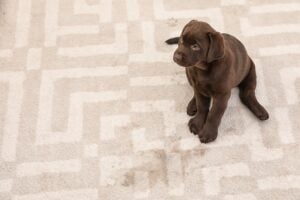 Pet accidents happen, but permanent carpet damage is avoidable. If you’re noticing recurring odors, staining, or areas your pet keeps revisiting, don’t wait until replacement is your only option.
Call Love Your Carpet today at 702-898-6070 to schedule expert carpet cleaning in Las Vegas. We’ll help you restore freshness, protect your flooring, and keep your home truly clean, from the surface down.